Siesta Key
Overview
Siesta Key is a barrier island off Sarasota, and Siesta Beach is the wide public strand on its Gulf-facing western shore. Its reputation rests on the sand: almost pure quartz, unusually fine, and pale enough that it stays cool underfoot in full sun, which is a genuinely unusual property rather than a marketing line.
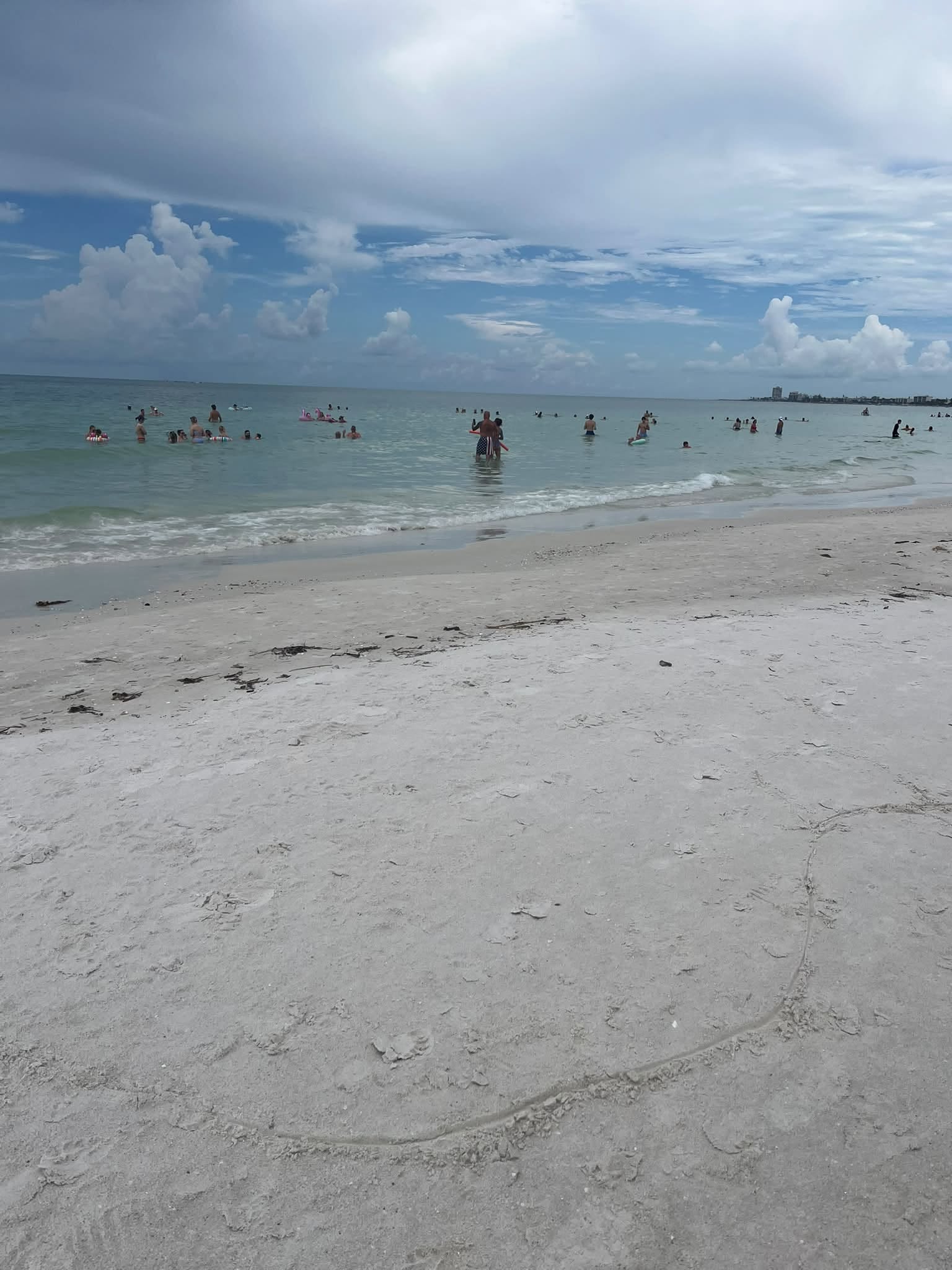
The beach is broad and shelves very gradually, so the shallows extend a long way out and the water is calm on most days. Behind it sits a large county park with the main lot, pavilion and concessions, with Siesta Key Village a short distance north.
The island has two other beaches worth knowing about. Crescent Beach continues south of the main strand and is quieter, and Turtle Beach at the southern end has coarser, darker sand and a steeper profile, which makes it a different beach in practice.
Our current condition score for this beach is .
Photo summary of last month
Photographs are published unedited and in date order, and they replace themselves as new submissions arrive.
One thing to bear in mind on a beach this wide: the tide line moves a considerable distance between low and high water, so two images taken hours apart can show quite different expanses of sand without anything having changed in the water.
Position relative to the Atlantic sargassum belt
The sargassum that affects Florida is carried north through the Florida Straits in the Florida Current, which becomes the Gulf Stream along the state's Atlantic coast, and in most years only small amounts reach the beaches of the Gulf coast.
The wrack that does appear on this beach is generally local: seagrass from the beds in Sarasota Bay and the passes, shell fragments and storm debris. It can look similar in a photograph, but it is not sargassum.
Anyone choosing between Florida coasts in summer should compare both on the live map rather than assume they behave alike.
The sargassum season
On this shore the seasonal variable that most often affects a visit is red tide, a bloom of the alga Karenia brevis that occurs naturally in the Gulf, most often in late summer and autumn. It is unrelated to sargassum, it does not look like weed on the sand, and it is worth checking locally before travelling in those months.
The Florida sargassum picture in full, including why the Atlantic coast behaves so differently from this one, is set out in our Florida sargassum season guide.
Swimming conditions and safety
The swim here is about as forgiving as Florida offers: fine sand, no rock, a very gradual shelf and usually light surf. It suits small children particularly well, and the shallows are wide enough that adults can stand a long way out.
Lifeguards are on duty from 10:00 to 17:00, seven days a week. Two cautions apply. Rip currents can form near Big Pass, at the northern end of the island, which is not comparable to the middle of the beach. And in a red-tide year the respiratory irritation is carried onshore by the wind, which is worth checking locally in late summer and autumn.
On sargassum, for completeness: fresh weed in the water is harmless, and the sulphurous smell associated with it comes from weed decomposing on hot sand over a day or more. Neither is a common experience on this coast.
Choosing a hotel on this stretch
Siesta Key is largely low-rise, with condominium rentals and small resorts rather than a wall of towers, and the island divides into three practical areas. Siesta Key Village at the north end is walkable for restaurants and bars and closest to the main beach. The middle of the island along Crescent Beach is quieter and mostly rentals. Turtle Beach at the south is the most isolated and has the campground.
Because the main beach is a county park rather than a hotel frontage, staying on the sand matters less here than being within reach of the village and the beach access points. Parking at the public lot is free but heavily used, which is the strongest argument for staying on the island rather than driving over from Sarasota.
Access and parking coordinates
Siesta Beach (Siesta Key)
Siesta Beach is a Sarasota County park with more than 950 free parking spaces, the most of any public beach in the county, and a free trolley runs from Siesta Key Village. The lot is one of the biggest in the region but still fills by late morning at weekends and through the winter season.
948 Beach Rd, Sarasota, FL 34242, USA
The Siesta Key Breeze trolley runs the length of the island and is free, which makes it the sensible way to reach the beach from anywhere on the key without competing for the lot. Sarasota-Bradenton airport is a short drive on the mainland.
Check live conditions before you go
Siesta Key is among the most consistently clean beaches we track, but consistency is not certainty. On the live map we track this beach with dated photographs and a current condition score, so you can compare the Gulf coast against the Atlantic beaches on the same morning.
See live conditions, photos & cams →