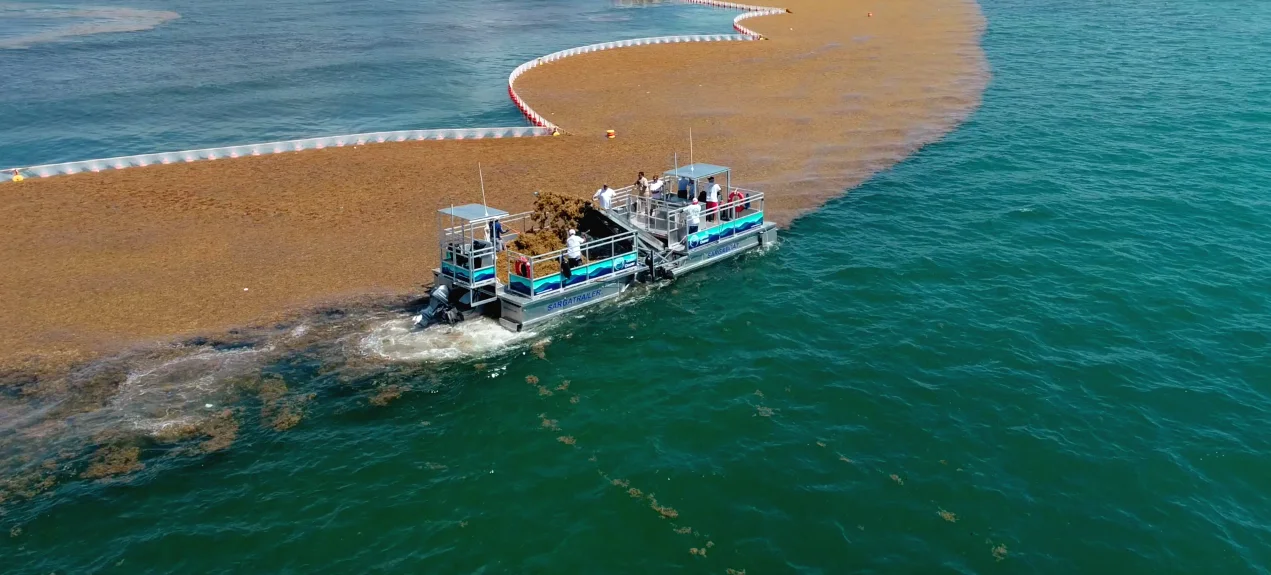
Sargassum has become a fact of life along Mexico's Caribbean coast, and governments, hotels, and local communities invest significant time, effort, and money every season to manage it. Sargassum is handled in three main zones: offshore, at the water’s edge, and right on the beach. None of these approaches fully solves the problem, and their success varies a lot depending on local geography. Here’s a closer look at what’s really being done, how effective it is, and what it means for your trip.
1. Blocking it at sea with barriers
The first line of defence is the floating barrier, or boom: a string of buoyant tubes anchored offshore that floats on the surface and corrals the sargassum before it reaches the beach, so it can be collected from the calm water behind it. In theory it is the ideal solution, stopping the weed before it ever lands and rots. In practice, results vary enormously from one beach to the next.
Puerto Morelos is the example most often cited as a success. The town sits behind a coral reef that creates a sheltered lagoon, and the calmer water there suits barriers well. On many days they noticeably cut the amount of weed reaching the sand. Even so, they are not a cure: fine fragments and decomposing material still slip through, and when volumes are high the water inside the lagoon can still turn cloudy or brown.
Playa del Carmen shows the opposite outcome. Its shoreline is far more open and exposed, with stronger waves and currents, and barriers there have proven much less reliable. Heavy surf pushes sargassum over and under the booms, strains the anchor lines, and can tear whole sections loose, so the protection ends up patchy at best.
The difference comes down to shelter and energy. Barriers work best in calm, protected water like a reef lagoon, where gentle currents let the boom hold its line. On a high-energy open coast, the same equipment is quickly overwhelmed. That is why two towns a short distance apart can get completely different results from identical technology.
2. Removing it at sea with boats
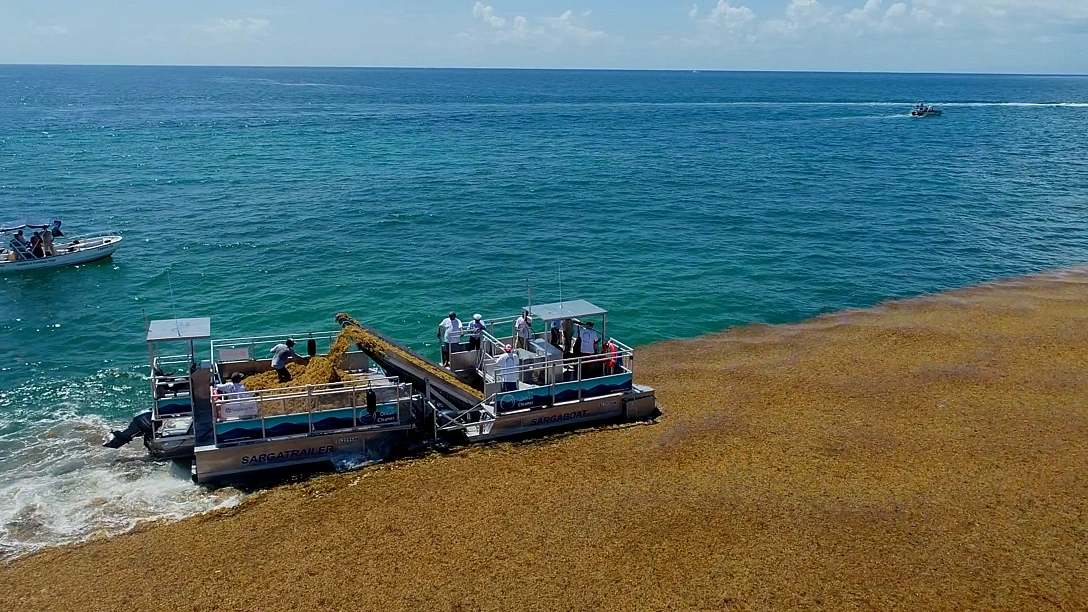
The second approach is to intercept the weed on the open water with specialised boats, often called sargaceros. Some are purpose-built catamarans fitted with conveyor belts and storage hoppers that scoop sargassum from the surface; others are smaller craft working closer to shore. In Mexico, the Navy (SEMAR) has led much of this offshore work since 2019, operating collection vessels and coordinating smaller boats alongside municipal and private teams.
Catching the seaweed at sea is appealing because it stops it from piling up and decomposing on the sand. The problem is capacity. Even a full fleet can only gather a fraction of the volume that arrives in a strong year, when the total reaching the wider Caribbean is measured in millions of tonnes. The boats are best understood as one layer of defence rather than a solution on their own.
Cost is the other constraint. Fuel, crews, maintenance and disposal add up quickly, and Mexico has committed large public budgets to the effort across several seasons. The sheer expense is a big part of why no government has managed to keep every beach clear.
3. Clearing it from the beach
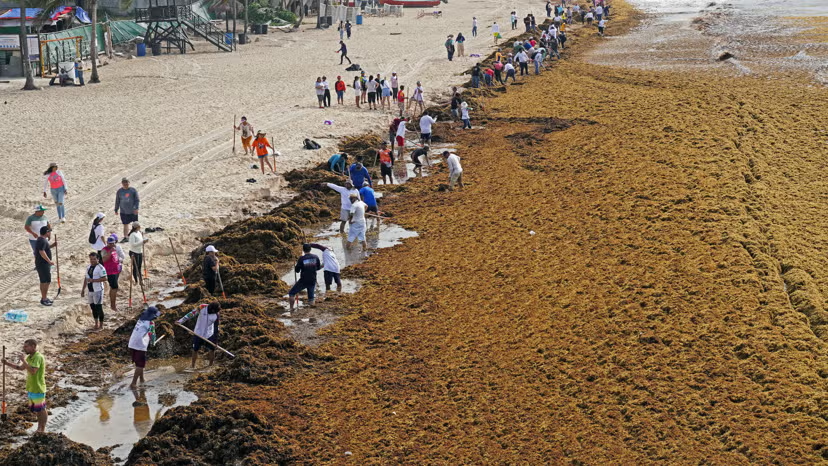
The most visible response is the daily clearing of the shoreline. On many beaches this is still done largely by hand, with rakes, baskets and wheelbarrows, and in some places with tractors and machinery, to keep the sand open and usable for visitors.
Fresh sargassum is fairly harmless, but once it accumulates and starts to decompose it releases hydrogen sulphide, the gas behind the strong rotten-egg smell. In large quantities this can cause headaches, nausea, and eye and respiratory irritation, especially for cleanup crews and anyone close to big, rotting piles. Decaying sargassum can also contain traces of arsenic and heavy metals, which is why it should not be used straight as garden compost without treatment, and why it has to be hauled away and disposed of carefully rather than simply buried on the beach.
Cleaning also has to be done with some restraint. Heavy machinery can drag away sand along with the weed and speed up erosion, and raking during turtle nesting season can disturb buried eggs. For those reasons many beaches limit how and when machines are allowed to operate.
4. Turning the problem into a resource
Removal is only half the story. A growing number of projects try to make use of sargassum instead of just dumping it. None of these will end the problem on its own, but together they point toward treating the seaweed as a raw material rather than pure waste:
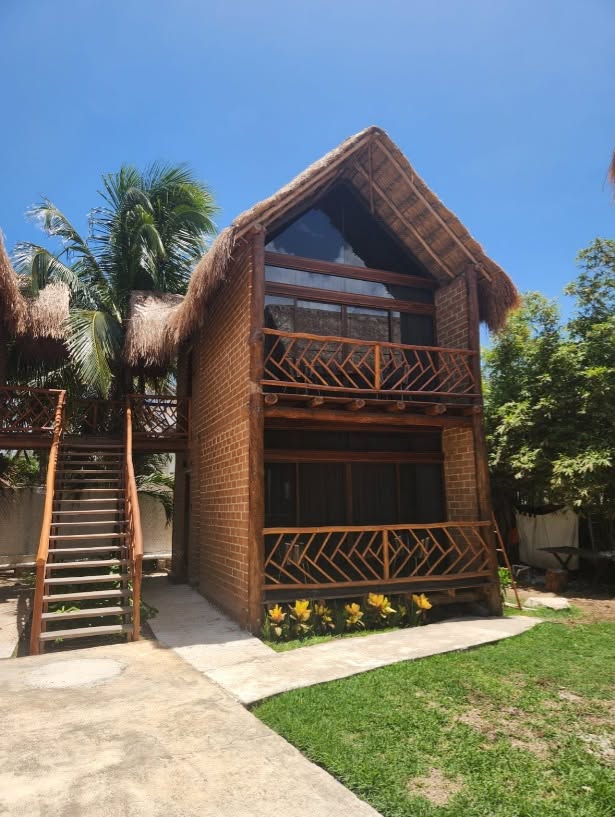
- Building blocks. Entrepreneurs in the region have pressed dried sargassum into low-cost construction blocks, and even built small houses from them, the best-known example being the "Sargablock."
- Fertiliser and biogas. Once washed and treated to manage its arsenic content, sargassum can be composted into fertiliser or fed into biodigesters to produce biogas for energy.
- Bioplastics, paper and more. Researchers and start-ups are turning the biomass into bioplastics, paper, and even shoe soles, finding everyday uses for material that would otherwise rot on the sand.
- Early warning. Satellite monitoring and forecasting, the same kind of data behind this site, lets hotels and towns position barriers, crews and boats before a large mat lands, instead of scrambling after it arrives.
No single method clears sargassum completely. The realistic goal is to blunt it, layer by layer, and to plan around the days it wins.
What to do when it arrives anyway
If sargassum reaches your beach during a trip, it is rarely a wasted day. The Yucatán Peninsula has an unusual concentration of inland and sheltered attractions that the seaweed never touches. Here are the best options, all within reach of the main resort areas.
Cenotes
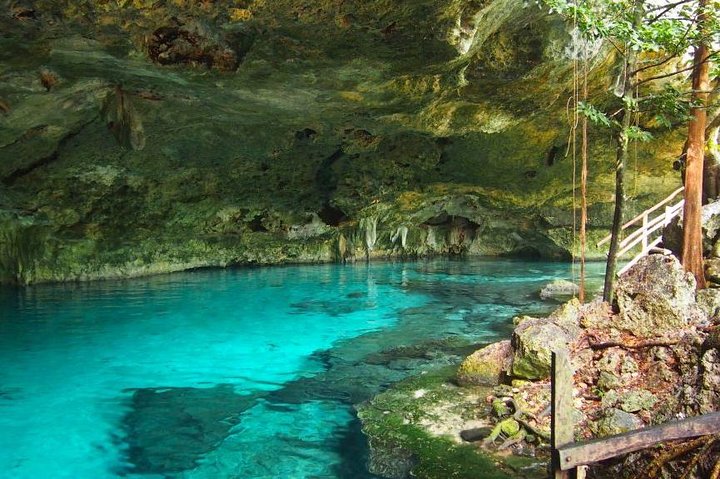
The peninsula sits over a vast network of cenotes, natural freshwater sinkholes in the limestone, with water that stays clear and cool all year and never sees a strand of sargassum. Among the most famous are Gran Cenote and Cenote Dos Ojos near Tulum, Cenote Cristalino along the Playa del Carmen corridor, the deep blue Cenote Azul, and Ik Kil near Chichén Itzá. Many pair neatly with a ruins visit or a half-day tour.
Plan an excursion: Browse cenote tours in the Riviera Maya →
Lagoons
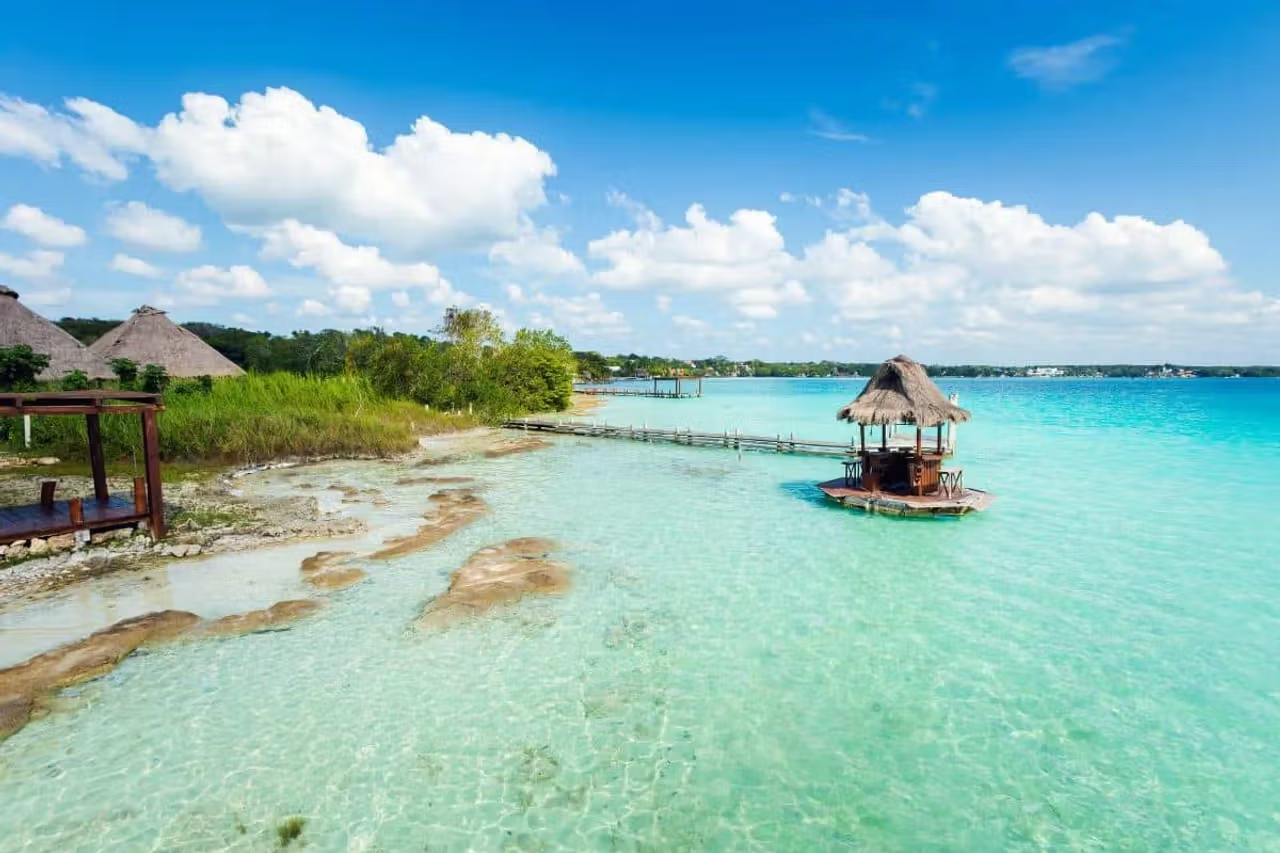
For open water without the ocean, the region's lagoons are a perfect substitute. The standout is Bacalar, the Lagoon of Seven Colors, a long freshwater lagoon in southern Quintana Roo famous for its bands of blue and turquoise over a white limestone bed. Closer to Tulum, Laguna Kaan Luum is a striking turquoise lagoon ringed by shallows with a deep central cenote, easy to reach on a day trip. Both are entirely free of sargassum.
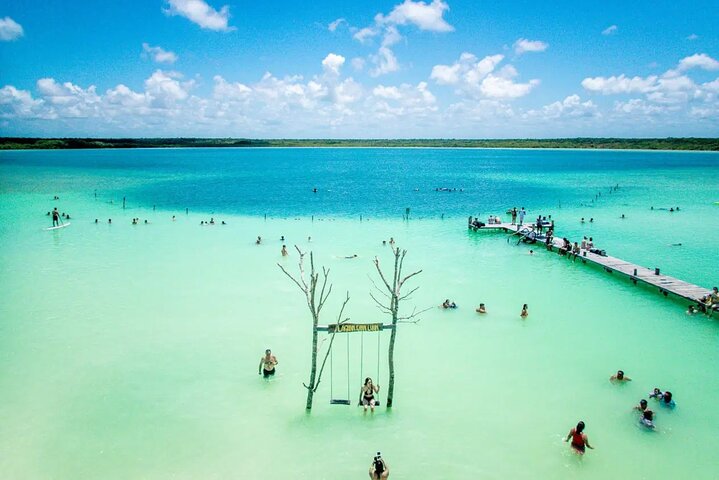
If you would rather stay on the water for a few days, Bacalar has excellent lagoon-front places to stay:
- Mía Bacalar Luxury Resort & Spa: a full-service resort set directly on the lagoon shore.
- Habitas Bacalar: a design-led, adults-only retreat on the water's edge.
See the lagoon: Browse Bacalar lagoon tours →
Maya ruins
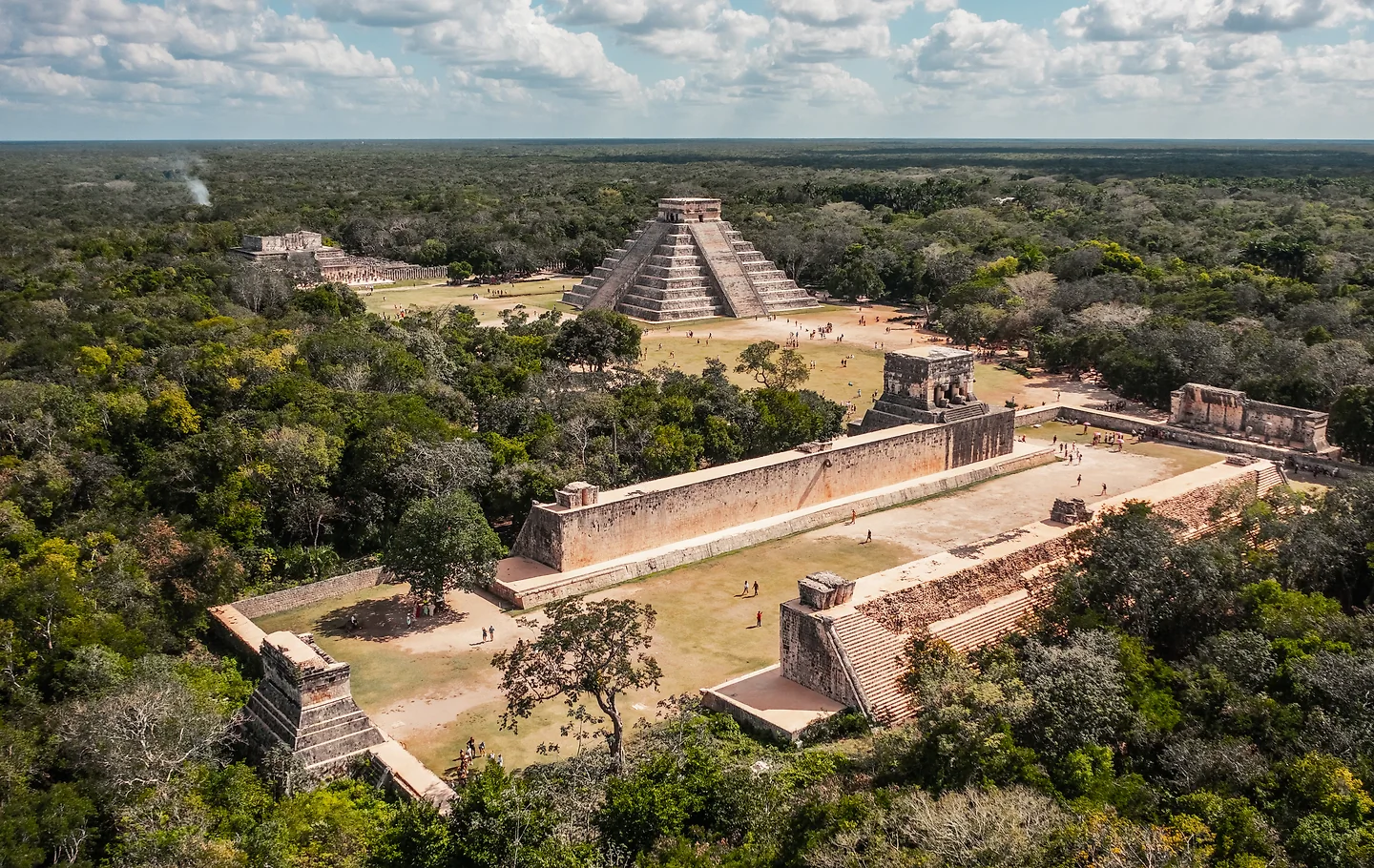
The peninsula's archaeological sites are among the finest in the Americas, and a day among them is a complete escape from the coast. Chichén Itzá, one of the New Seven Wonders of the World, is the most celebrated, crowned by the great pyramid of Kukulcán. Nearer the coast, the cliff-top ruins of Tulum sit directly above the Caribbean, and the tall jungle pyramids of Cobá are an easy trip inland from the Riviera Maya.
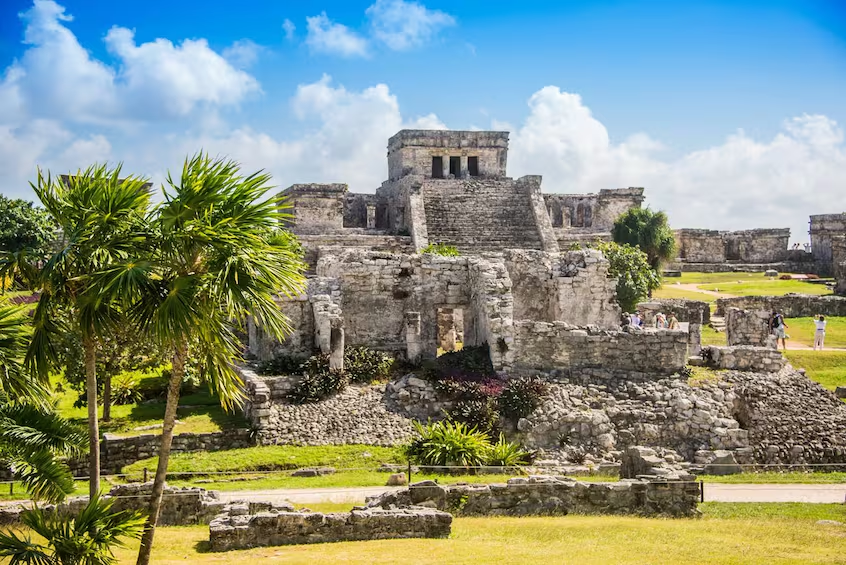
Visit the ruins: Browse Chichén Itzá tours → · Browse Tulum ruins tours →
The islands
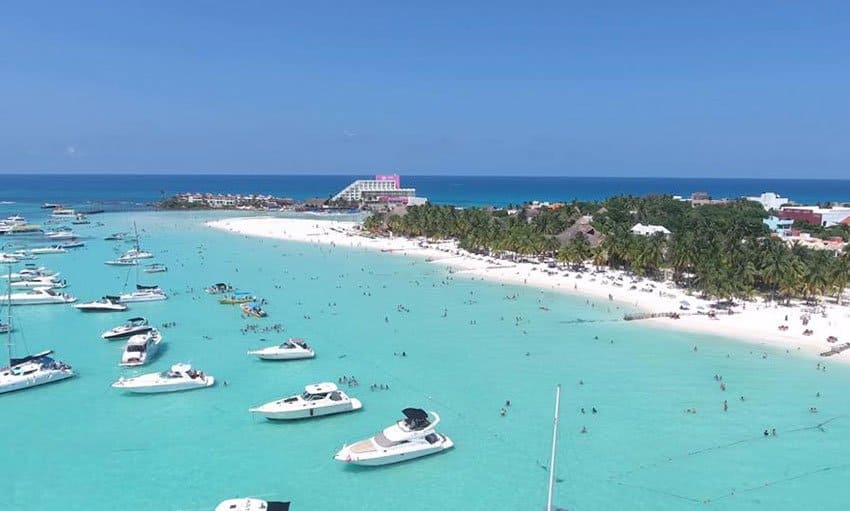
When the mainland is affected, the two offshore islands are the most reliable beach option of all, because their sheltered, west-facing shores stay clearer. Isla Mujeres, a short ferry from Cancún, is known for the calm water of Playa Norte and the reef at Parque Garrafón. Cozumel, reached by ferry from Playa del Carmen, is a world-class diving and snorkelling destination on the Mesoamerican Reef. For a deeper look at both, see our guide on where to go to avoid sargassum.
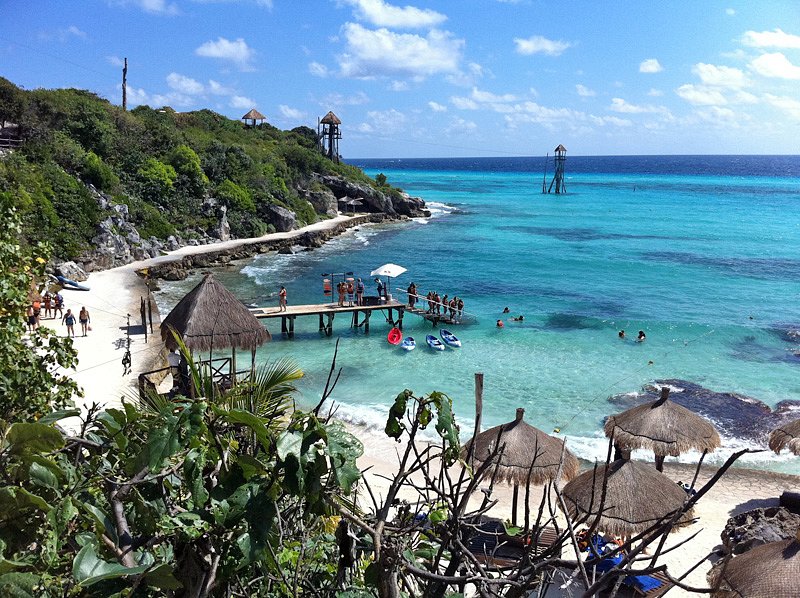
Both islands are reached by frequent passenger ferries:
Book a ferry: Ferry tickets to Isla Mujeres → · Ferry tickets to Cozumel →
For a beach base on the islands, these waterfront hotels sit on the calmer, clearer shores:
- Mia Reef Isla Mujeres: on its own private islet at the sheltered northern tip.
- Privilege Aluxes: an adults-only resort on the calm Playa Norte shoreline.
- Presidente InterContinental Cozumel: on Cozumel's protected leeward coast, with its own house reef.
Before you book or travel: open the Forecast page for the daily satellite outlook, then use the live beach map to check current conditions at the exact beach you have in mind.
Some links to hotels and activities are affiliate links. If you book through them, Sargazo Watch may earn a small commission at no additional cost to you. This helps keep the live map and forecast free to use.