When sargassum affects the coast, visitors are routinely advised to spend the day at a cenote. That advice is sound, but it is rarely accompanied by any guidance on which one to choose. Estimates of the number of cenotes across the peninsula run well into the thousands, though only a small fraction are developed for visitors, and the practical shortlist is smaller still. Those that are open differ considerably from one another, and the quality of the day usually depends on having selected the type that suits you rather than the best known.
This guide covers the cenotes that merit a full day, grouped by location: the coastal corridor between Playa del Carmen and Tulum, the Ruta de los Cenotes inland from Puerto Morelos, and the cluster surrounding Valladolid. For each, we cover what distinguishes it, its location, the facilities and atmosphere on offer, an indicative price, and the visitor it best suits.
Two points to note before setting out: almost every cenote charges cash in pesos at the gate, and there are no cash machines along the inland roads. Conventional sunscreen and insect repellent are prohibited at most managed cenotes, and a rinse before entry is frequently required. Biodegradable products are accepted at some sites but not all, so it is safer to arrive with none applied.
What a cenote is
The northern Yucatán has almost no surface rivers. It is a shelf of porous limestone, and its fresh water moves underground through an extensive network of flooded caves. A cenote is a point at which the rock above one of those passages has collapsed, opening a window onto the water table.
That single fact accounts for their character. Because the water has filtered slowly through limestone rather than running across ground, it arrives almost free of sediment, which explains the exceptional clarity. Because the caves stood dry during the last ice age, when sea level was considerably lower, stalactites and stalagmites formed in air and are now submerged, which explains why flooded caverns contain formations at all. And because these openings represented the only reliable water supply, Maya settlement across the peninsula corresponds closely to their distribution, and they carried ritual significance as entrances to the underworld.
The four types, and how to choose between them
Cenotes are conventionally classified by how far the collapse has progressed, which is also the most practical basis for choosing one.
- Open: the roof has gone entirely, leaving a pool ringed by jungle and open to the sky. Bright and warm, well suited to children, with no formations.
- Semi-open: partially collapsed, with daylight falling through gaps onto water inside a cavern. These combine the qualities of both and are generally the most photogenic.
- Cavern: enclosed and entered by staircase, lit either by an opening in the ceiling or by lamps. Cool and dramatic, with formations close overhead, though unsuitable for anyone uneasy in enclosed spaces.
- Ancient: fully closed cave systems, accessible only to certified cavern and cave divers.
As a general principle, an open cenote suits families with young children, a semi-open one rewards anyone travelling with a camera, and a cavern is the right choice for you if the geology interests you more than the swim.
The coastal cenotes: Playa del Carmen to Tulum
These lie within an hour of most Riviera Maya hotels, which accounts for both their popularity and their principal drawback. They are the busiest and the most expensive of the region's cenotes, and also the most developed, with the clearest signage, the best facilities and the most guiding available.
Cenote Dos Ojos
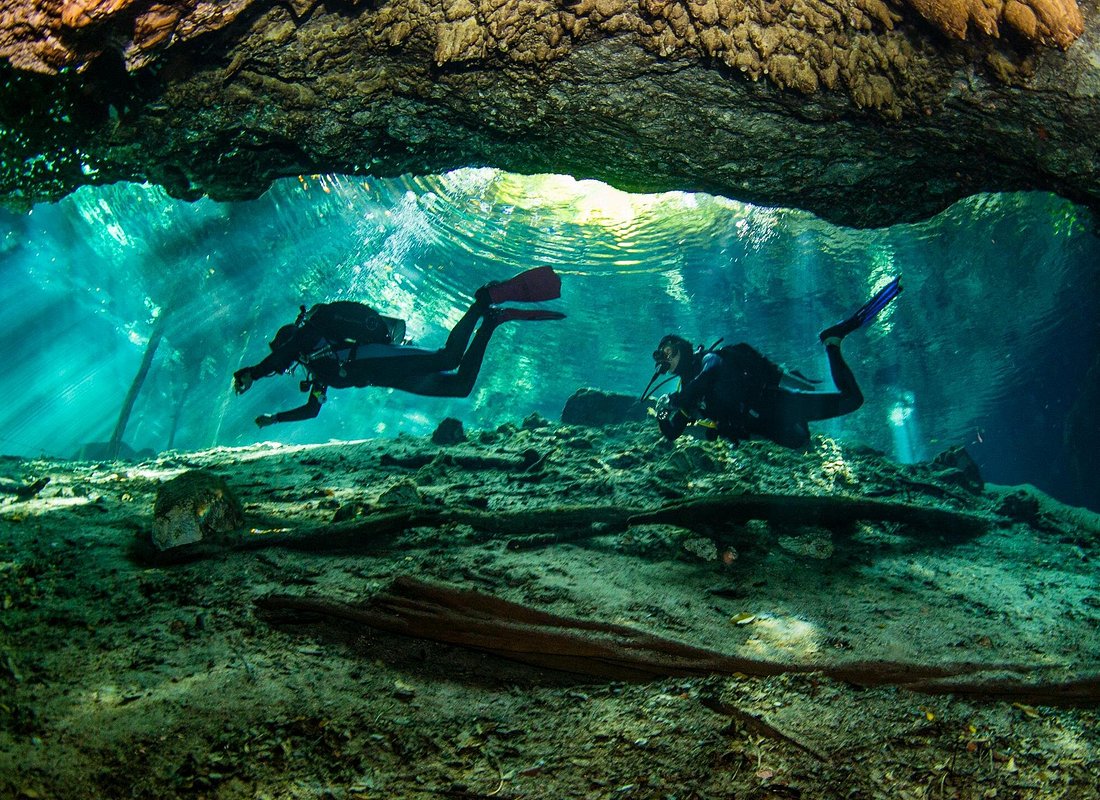
The two "eyes" lie a short walk apart, connected underwater, and both form part of Sac Actun, the largest surveyed underwater cave system in the world at approximately 347 kilometres of mapped passage. This is the cenote to choose for cavern rather than open water. Daylight falls through the collapsed sections onto water clear enough to reveal the far wall, and the formations hang close to the surface.
Entry costs around 400 pesos and includes a life jacket. The guided snorkelling tour is roughly double that and represents the meaningful upgrade, since it provides access to the Bat Cave, the dark section beyond the daylight. Facilities are better developed than at most cenotes, which is why the site works for families prepared to pay the higher entry. It lies about 14 kilometres north of Tulum, with a further two kilometres of unpaved road from the ticket office on the highway.
Full guide to Cenote Dos Ojos →
Gran Cenote, Casa Cenote and Zemway
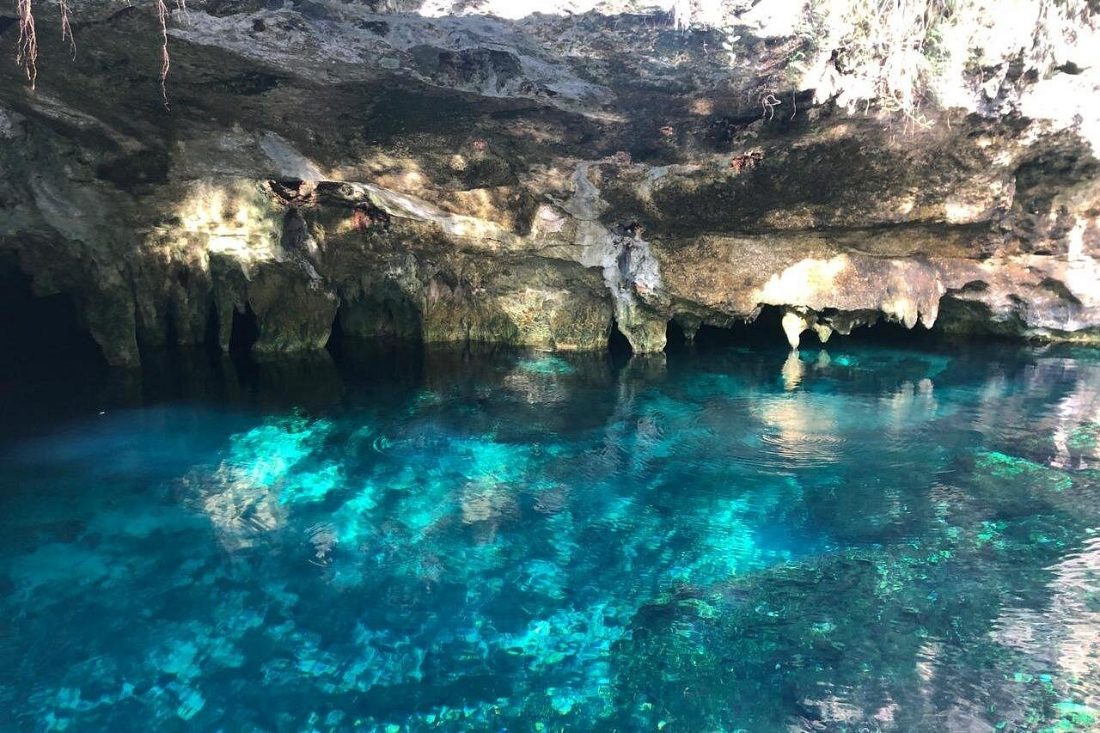
Gran Cenote is the region's definitive semi-open cavern and deservedly appears on every list. Wooden walkways run between the pools, stalactites hang close to the water, and shafts of daylight fall through the open sections. Small turtles are common in the shallows.

Its weakness is its popularity. The site lies minutes from central Tulum and fills by mid-morning. The usual remedy is a guided tour of three cenotes, adding Casa Cenote, an open mangrove channel with a soft sand bottom where fresh and salt water meet, and Zemway, which holds the jumping platforms. The tour runs four hours, occupies a single morning, and costs from around $136 per person.
Full guide to the triple cenote tour →
Cenote Cristalino
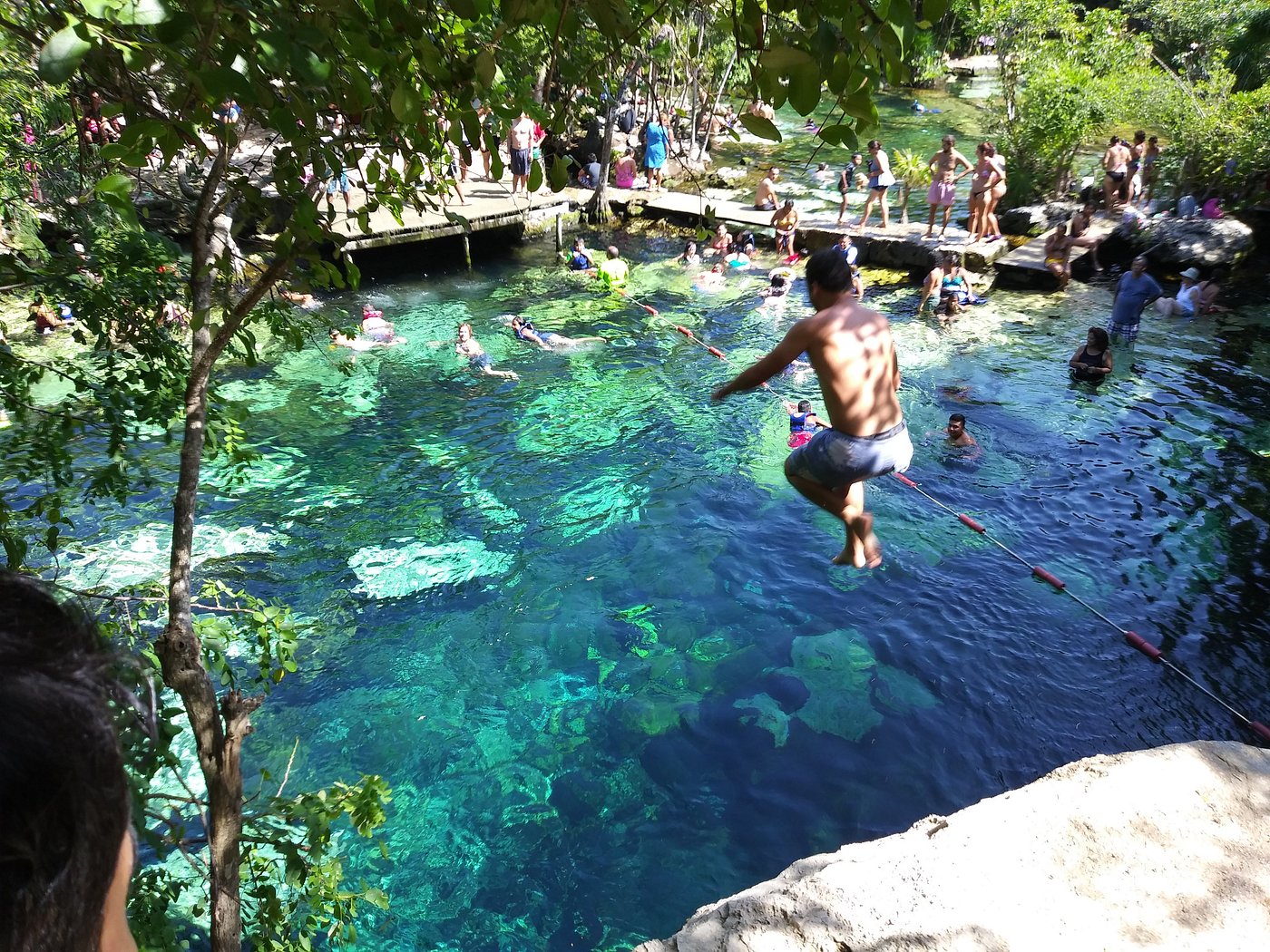
This is the least expensive of the worthwhile cenotes on this stretch and the simplest to incorporate into an existing day. It comprises several linked open pools some 20 kilometres south of Playa del Carmen, adjacent to Cenote Azul and Jardín del Edén, with a jumping ledge of around four metres, a rope swing, and a small cave at the edge of the main pool that can be swum into. Depths range from about one metre to six, which suits groups of mixed confidence.
Entry is roughly 150 to 200 pesos, cash only at the booth beside the highway, and includes parking and a life jacket. The cenote is open daily from approximately 8am to 5.30pm.
Cenote Chaak Tun
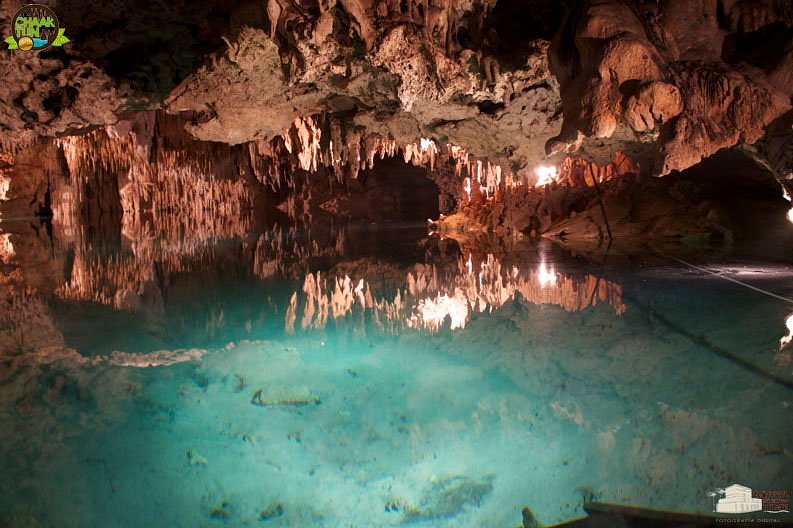
Chaak Tun lies ten minutes from Quinta Avenida and is unlike anything else within that distance. It consists of two connected cave cenotes holding the densest stalactite and stalagmite formations near Playa del Carmen: the principal cave is lit by a single large opening in the ceiling, and the second is reached by a spiral staircase. The visit takes the form of a guided route through three caves, two flooded and one dry, rather than a free swim.
Guided entry costs around $30, tours depart every half hour, and last entry is at approximately 3pm, with shorter hours on Sundays. It is the appropriate choice for the formations and the guiding, and the wrong one for anyone hoping to spend the afternoon in the sun.
The Ruta de los Cenotes: the quieter alternative
A single paved road runs some 30 to 35 kilometres west from Highway 307 at Puerto Morelos towards Leona Vicario, and it represents the most concentrated stretch of accessible cenotes in the state. A map board stands at the junction and the turnings are signposted, so a hire car is the only requirement.
These cenotes share the geology of the better-known sites near Tulum but offer a markedly different experience. Most are operated by local ejidos or families rather than tour companies, so facilities are simpler and the emphasis falls on ziplines, jumping platforms and palapas rather than boardwalks and turnstiles. Entry costs a fraction of the coastal prices, and attendance is correspondingly lower. None of these cenotes appears on any booking platform: visitors arrive and pay at the gate in pesos.
Cenote Verde Lucero
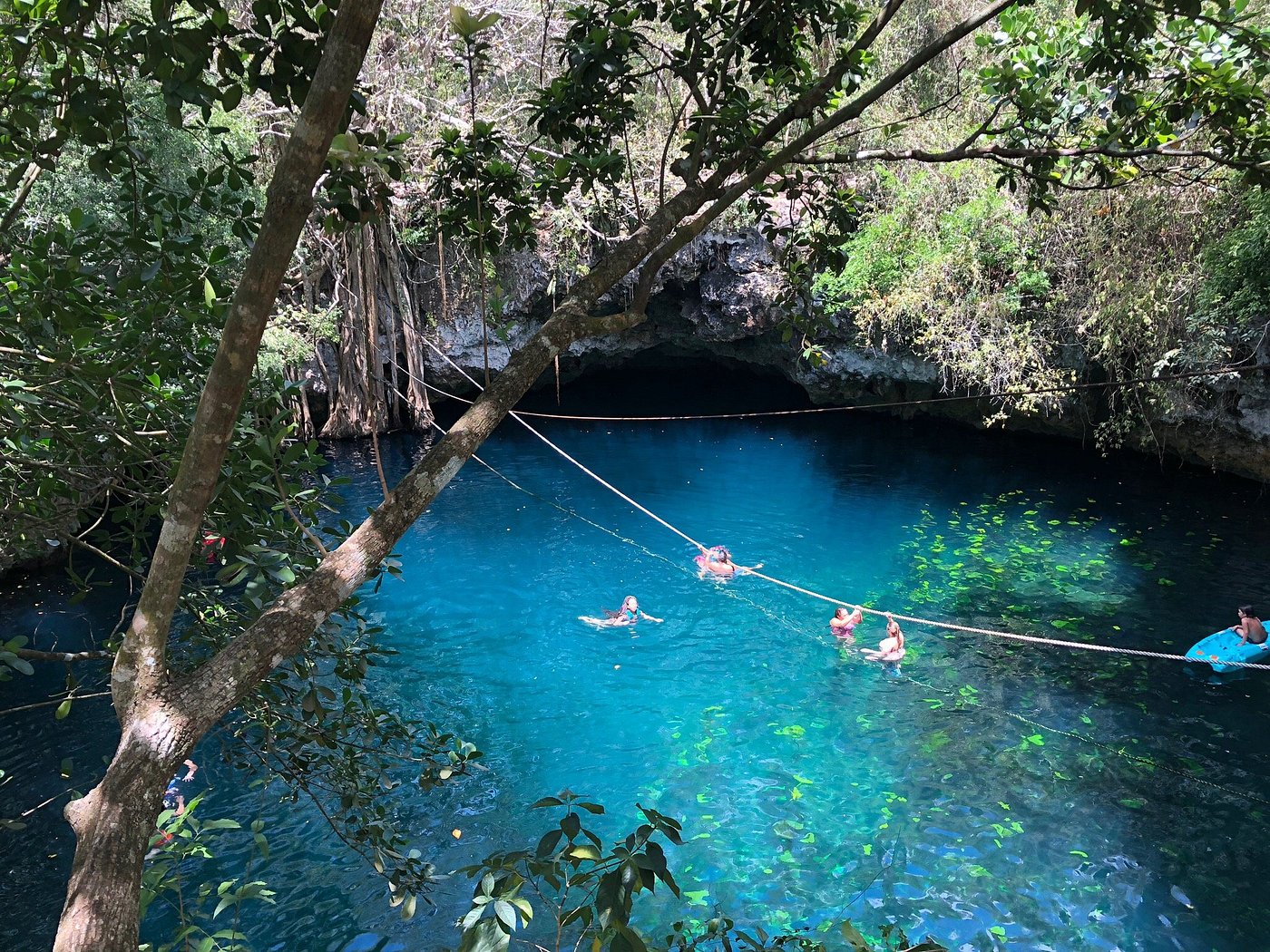
Verde Lucero is the cenote to choose for ziplining. It is an open pool ringed by jungle just beyond kilometre 17, some 200 metres from the road and half an hour south of Cancún, with an aquatic zipline, jumping platforms of roughly 2, 4 and 7 metres, and water around 20 metres deep. A limestone overhang shades one edge and there are small caves around the rim to explore, though the platforms are the principal attraction.
The cenote opens daily from approximately 9am to 5pm. Entry is commonly sold as a combined ticket of around 250 pesos covering several cenotes along the route rather than Verde Lucero alone, which is the most economical way to visit three or four in a day.
Cenote Las Mojarras
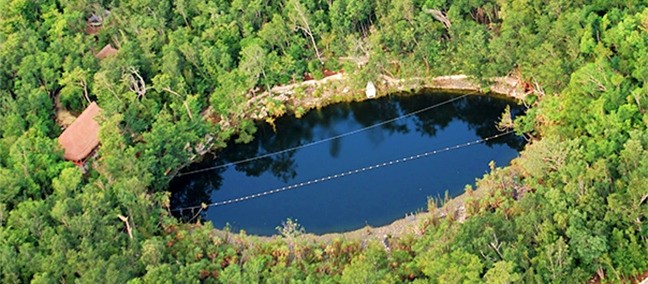
Las Mojarras is the first cenote along the route, at around kilometre 12.5, and the most straightforward. It is a wide open pool roughly 65 metres across and about 14 metres deep, named after the cichlids that live in it, with a double jumping tower of around six metres and a zipline across the water. There is no cavern and there are no formations, which is the trade for space, sunlight and considerably fewer visitors.
Swimming entry costs around 250 pesos, although reported prices vary between operators and seasons. Entry generally covers the jumping platform, a life jacket, changing rooms, tables and parking, with the zipline, quad bikes and food charged separately. Hammocks, a picnic area and grills make the site suitable for a full afternoon rather than a brief swim.
Cenote Siete Bocas
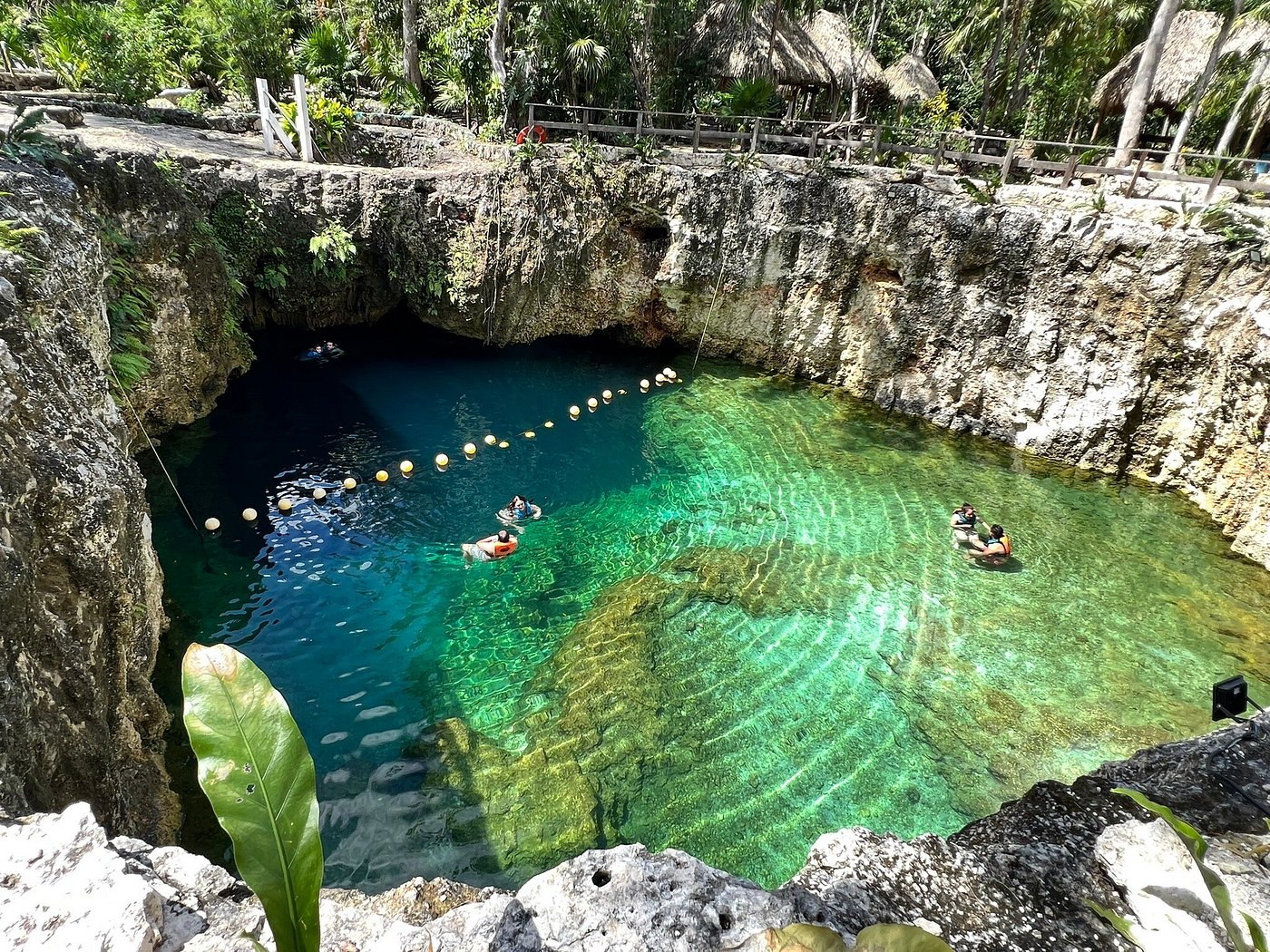
The name translates as "seven mouths", a reference to the openings in the rock above the water. What visitors swim in is a broad basin below the level of the jungle floor, partly bright and open and partly extending back beneath a limestone overhang into shadow, with a buoy line marking the swimming area. The cenote lies inland from Puerto Morelos, is reached by a track off the main route road, and charges cash at the gate.
Facilities are basic, as they are throughout this road. It is the appropriate choice for visitors who want the scale and the half-shaded water of a cavern without the crowds and prices found near Tulum.
Valladolid and the Yucatán interior
Two hours inland from Cancún the cenotes change character again. Valladolid sits close to the inner edge of the Chicxulub impact crater, where the limestone fractured most heavily, and that fracture ring concentrates sinkholes in an arc across the north of the peninsula. Three substantial cenotes lie within half an hour of the town square, and Chichén Itzá is 40 minutes to the west.
Cenote Suytun
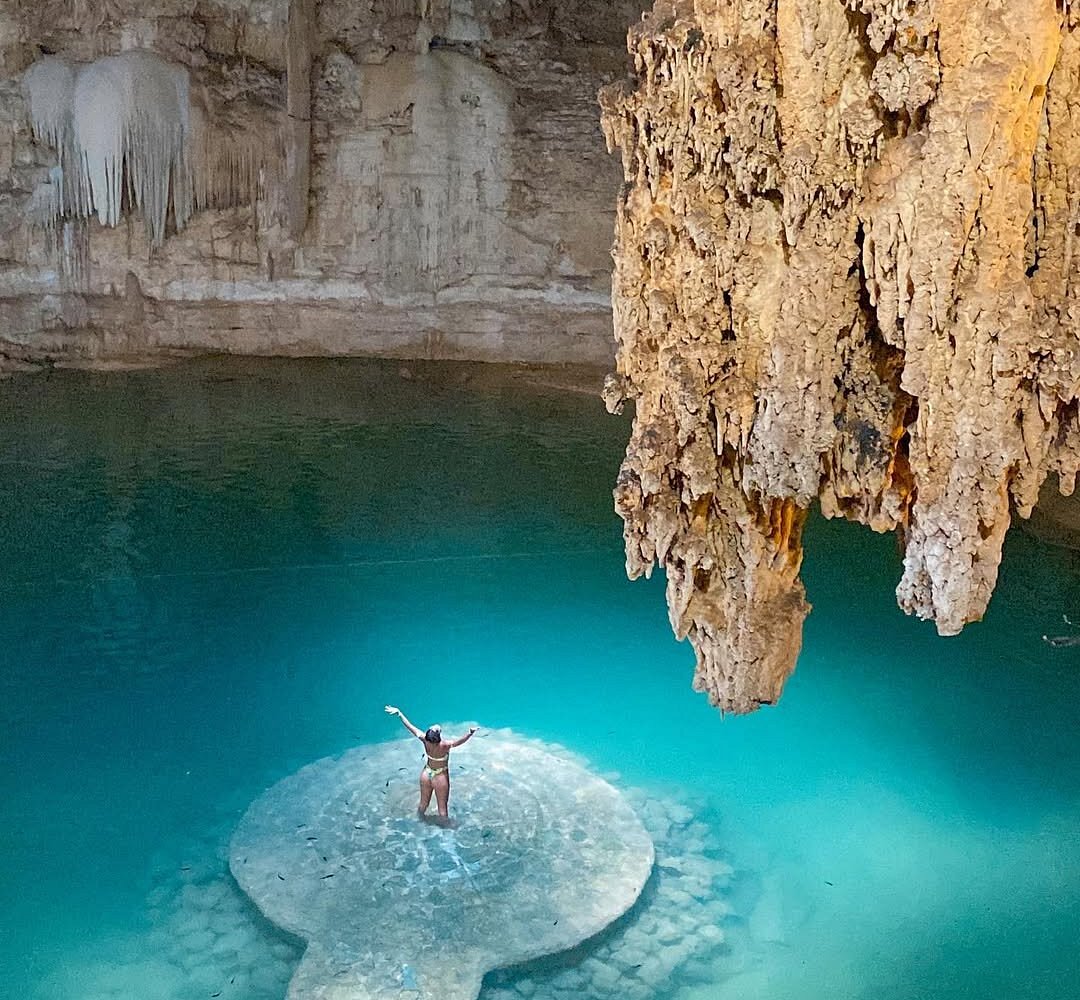
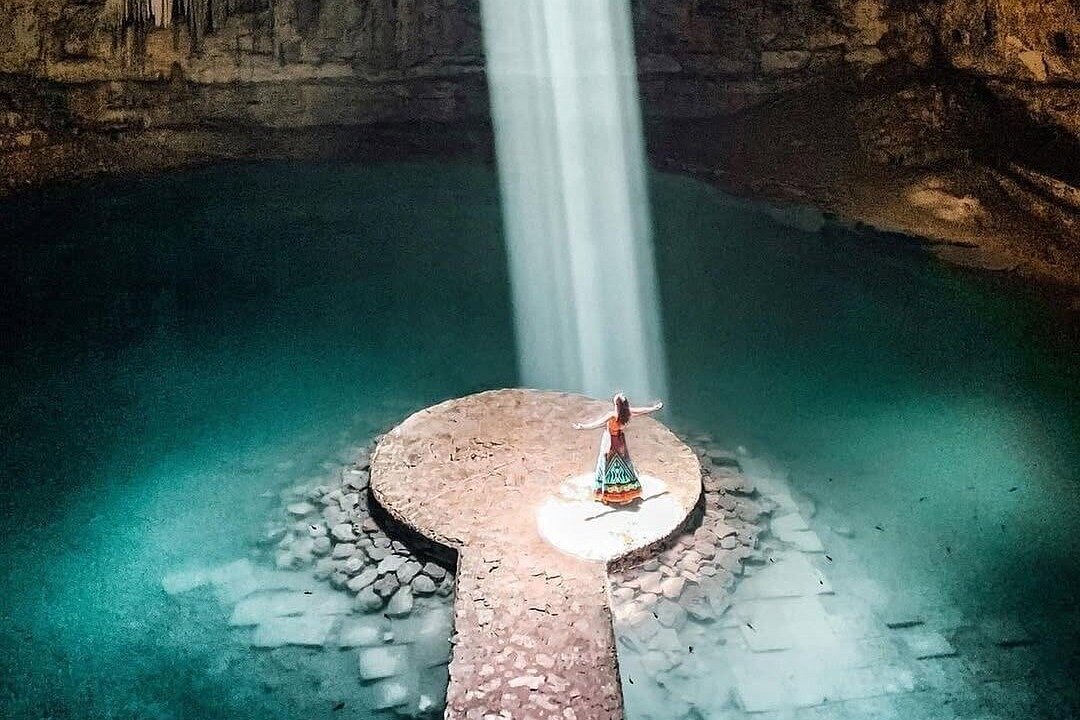
Suytun is the most recognised cenote in the region. Visitors descend into a domed chamber in which water covers most of the floor apart from a raised circular platform reached by a causeway, and around midday a single column of light falls through the roof opening directly onto it. That photograph is the reason most people make the journey.
The consequences are worth understanding in advance. A queue forms for the platform and there is a steady rotation of visitors taking the same image, and reviewers who arrive expecting a quiet swim describe an hour spent largely waiting. The beam also depends on sunshine, season and time of day, so an overcast morning or an early arrival produces a handsome cave without the light. Approached as a photograph and a short swim, the cenote delivers precisely that.
Nool Ha, Chukum and Ik Kil
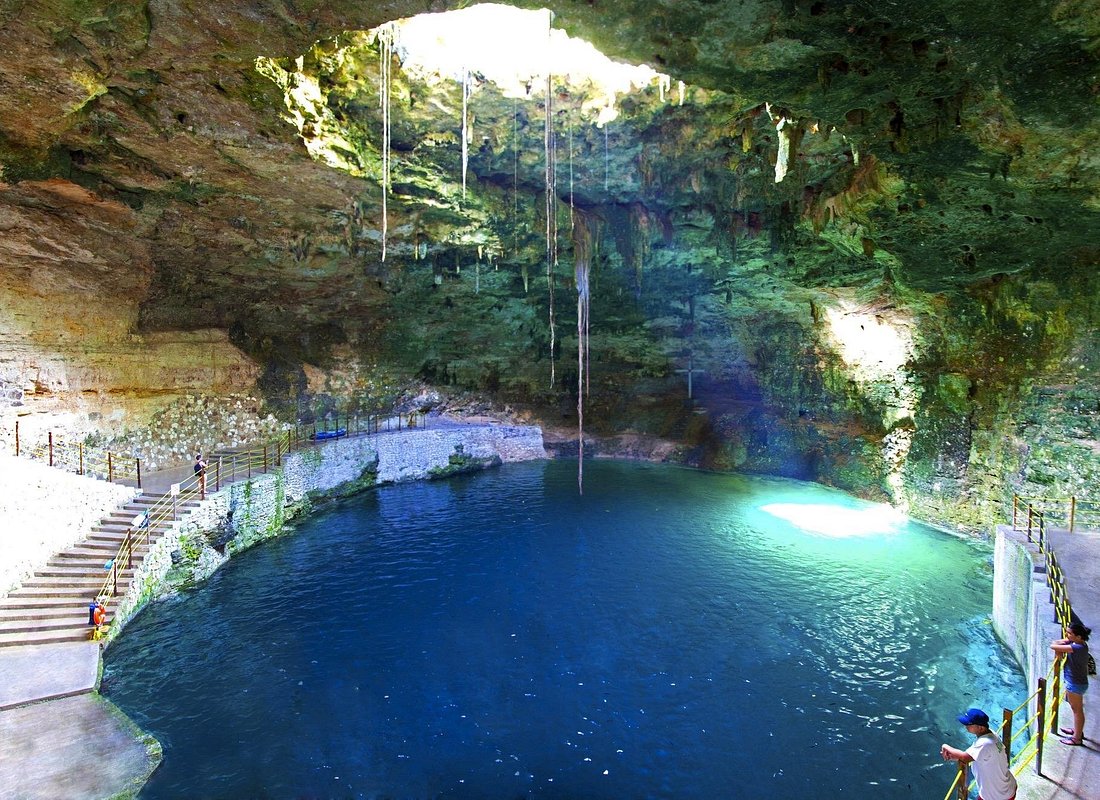
Suytun is seldom sold on its own, and the cenotes accompanying it are what make the day worthwhile. Nool Ha is open and bright, with a zipline across the water. Chukum is a large turquoise cavern in which the swim matters more than the photograph, with an adjoining restaurant where tours generally take a Maya meal. Ik Kil, nearer Chichén Itzá, is the archetypal round open cenote: sheer walls dropping some 26 metres to the water, curtains of vine root hanging from the rim, and a carved staircase descending inside.
The most efficient version of this day combines Chichén Itzá with Ik Kil, Suytun and time in Valladolid, from around $80 to $95 including lunch. For visitors already making the inland journey for the ruins, adding cenotes costs very little additional time.
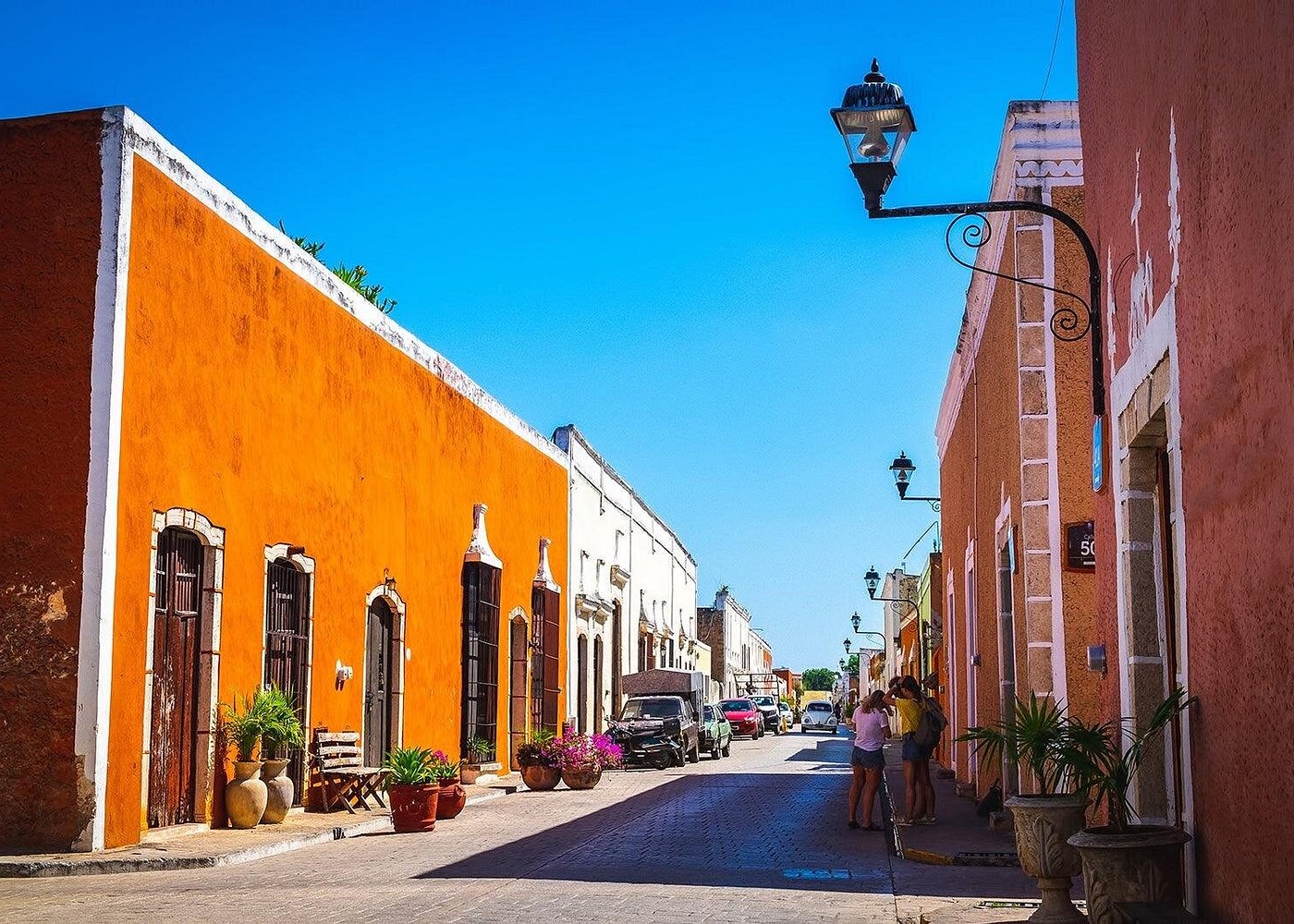
One planning consideration carries more weight than any individual recommendation here. Staying a night in Valladolid converts two long drives into a single short morning, and places visitors at both Chichén Itzá and the cenotes before the coaches arrive from the coast.
A summary by priority
- The finest cavern: Dos Ojos, or Chaak Tun for those short of time in Playa del Carmen.
- The best all-rounder: Gran Cenote, ideally as part of the three-cenote morning.
- The best value: Cristalino on the coast, or a combined ticket along the Ruta de los Cenotes.
- The best with children: Las Mojarras or Verde Lucero, for the space, the shade and the jumping towers.
- The best photograph: Suytun, subject to the qualifications above.
- The quietest: Siete Bocas, and any cenote along the Ruta de los Cenotes before mid-morning.
Practical notes that apply throughout: carry cash in pesos; arrive before mid-morning everywhere except Suytun; apply no sunscreen beforehand; wear water shoes, since wet limestone and wooden steps are what visitors most often wish they had prepared for; keep insect repellent for after swimming rather than before; and consider combining two or three cenotes in a day, given that they lie minutes apart and each differs from the next.
If a poor sargassum week has brought you to this article, consult the live beach map before committing to an inland day. Conditions on this coast change within days, and the morning written off in advance occasionally turns out to be the morning it clears.