Sargassum can be unpredictable, particularly in summer, which is the peak of the season. Even with careful planning, a shift in the current can leave the beach outside your hotel buried in seaweed within a day or two, and travellers who arrive without checking conditions can find themselves in one of the worst-affected stretches.
It does not have to ruin your holiday. The Mexican Caribbean is compact and exceptionally well connected, and on almost any given day there is a clear beach within reach of a short, affordable journey. This guide explains how to use the region's transport, the shared vans, the intercity buses, the ride-hailing apps and the ferries, to travel from a sargassum-hit shore to a clearer one. Before setting out, open our live beach map to see which beaches are currently marked green or blue.
The premise: let's assume you are staying in Playa del Carmen and the beaches in town are heavily affected. Your options fall into two categories: travel north to Cancún and its bay-side beaches, or take a ferry to one of the islands.
1. Head north to Cancún
When the mainland beaches around Playa del Carmen are covered, the bay-side beaches at the northern end of the Cancún Hotel Zone, such as Playa Tortugas, Playa Langosta and Playa Caracol, are often noticeably clearer, because they face the sheltered Bahía de Mujeres rather than the open Atlantic. Check them on the live map first; when they show green or blue, they make an easy day trip. There are three ways to get there, at very different price points.
Option A — Colectivo (budget)
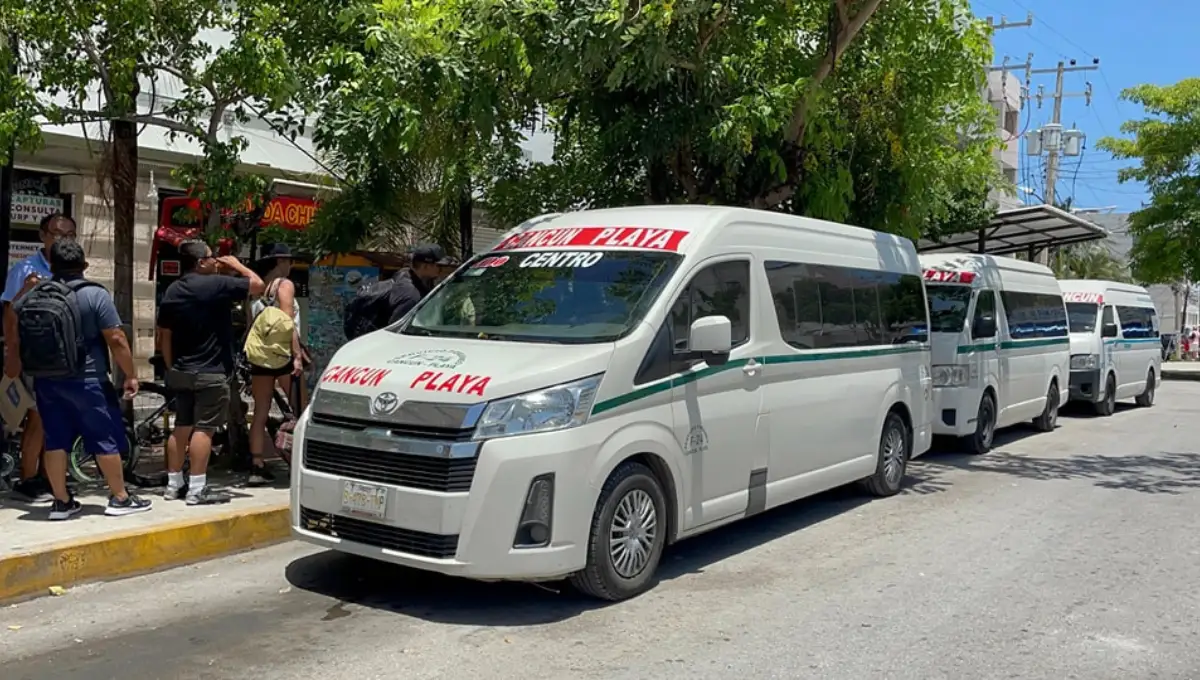
Colectivos are shared vans that run continuously up and down Highway 307, the main artery linking Cancún, Playa del Carmen and Tulum. They are the cheapest option by far: the one-way fare to Cancún is roughly 45 to 60 pesos, paid in cash on board. They leave when full, which rarely takes more than five to ten minutes, and reach downtown Cancún in about an hour.
The trade-off is comfort. Many vans have weak or non-existent air conditioning, and the Cancún-bound colectivos stop frequently along the way to pick up and drop off hotel workers in Puerto Morelos and the resorts in between. Some vans are more direct to the Cancún terminal than others.
Where to catch it: the Cancún-bound vans depart from the area around Calle 2 Norte, near the ADO terminal, and from the van lot beside the Chedraui supermarket just south of Avenida Juárez. When you arrive in that zone, ask which van is the more direct service to the terminal de Cancún, as opposed to one making every local stop. The route ends across from Cancún's downtown bus terminal; from there you continue into the Hotel Zone by city bus (the R-1 or R-2, around 12 pesos) or a short taxi.
Option B — ADO bus (comfortable and affordable)
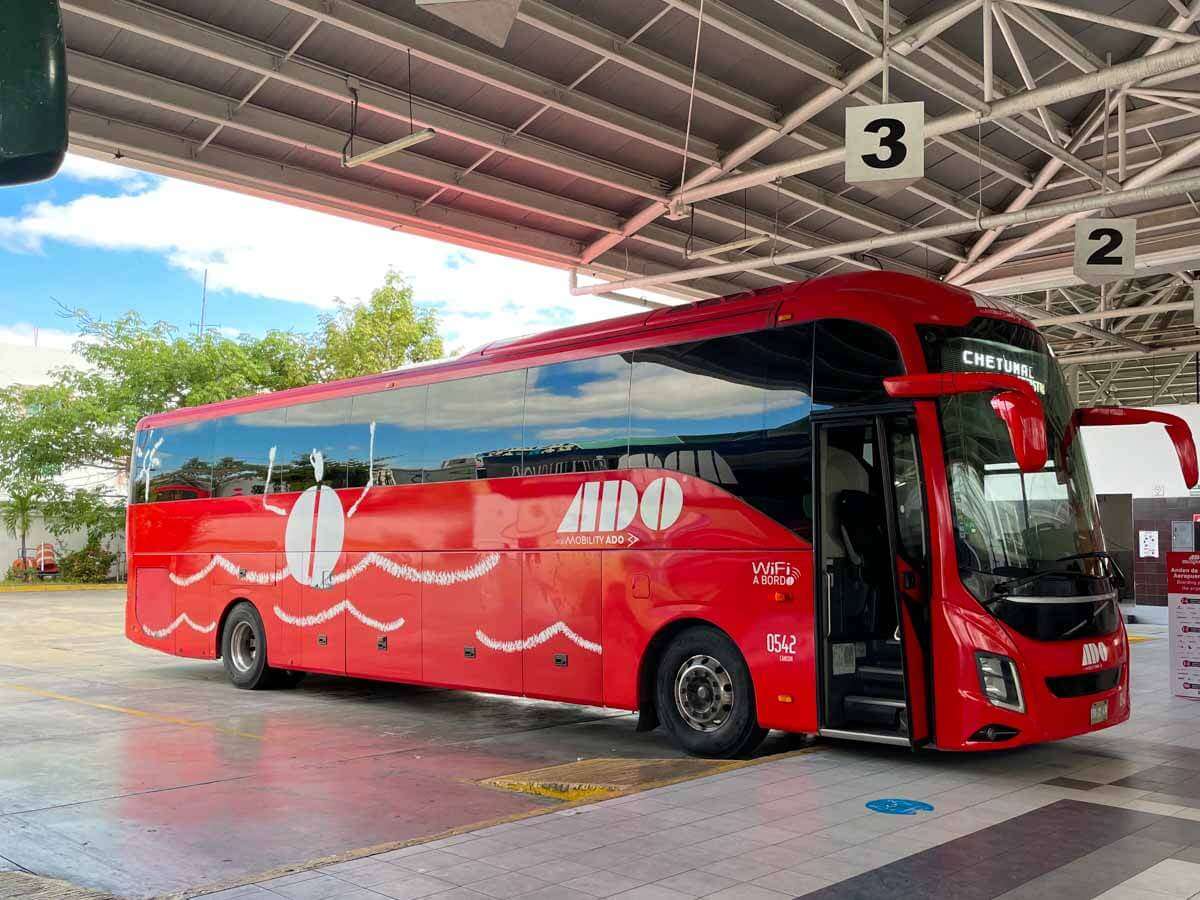
ADO is Mexico's intercity coach line: air-conditioned, comfortable, with assigned seating and a fixed schedule. It costs a little more than a colectivo but remains very affordable, generally in the region of 80 to 130 pesos one way to Cancún depending on the departure. The buses do not race, but they are comfortable and drop you directly at Cancún's downtown ADO terminal, with buses running roughly every half hour and a journey time of about an hour.
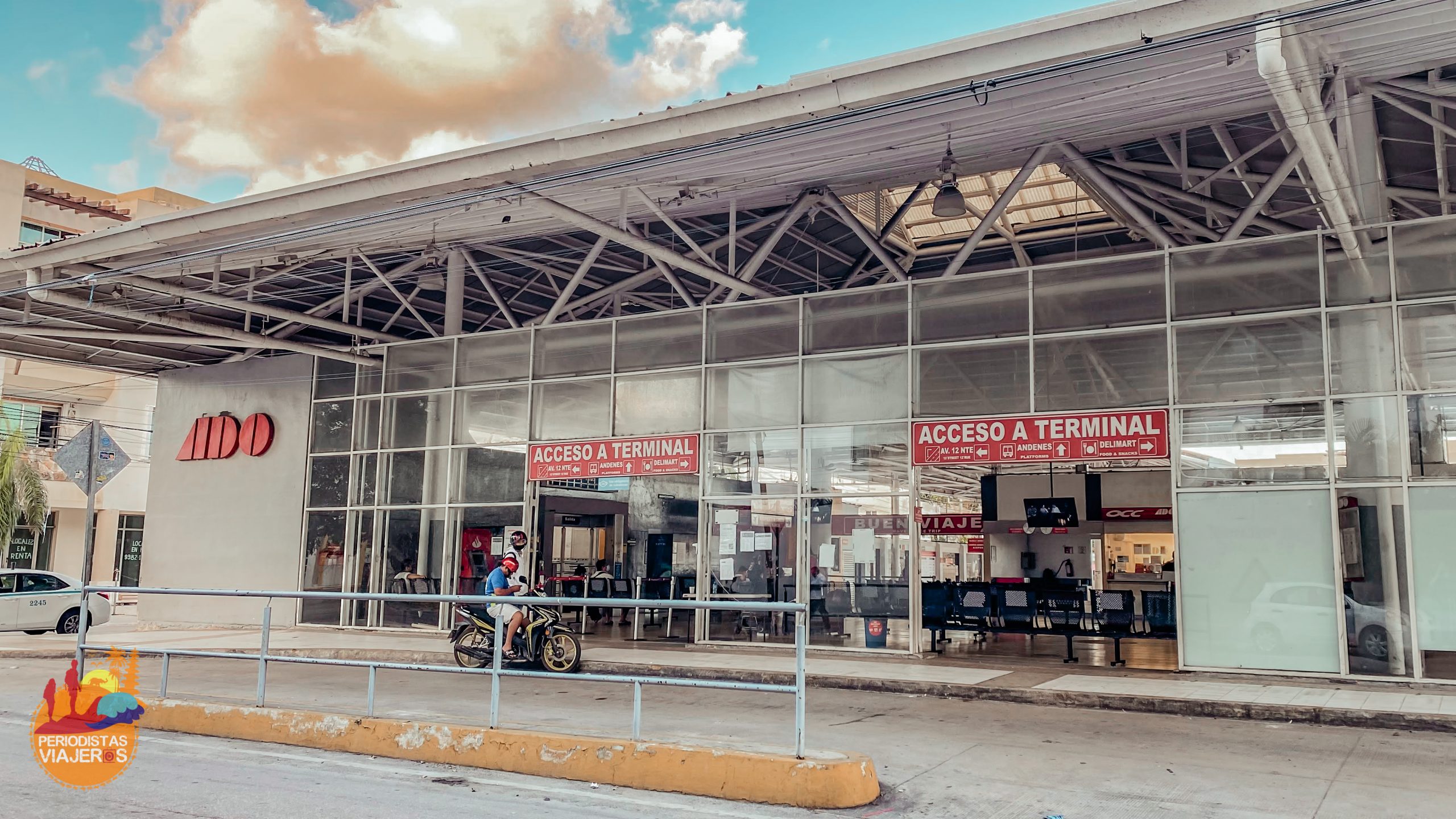
Where to catch it in Playa del Carmen: there are two ADO stations.
- ADO Terminal Turística (Quinta Avenida): on Fifth Avenue at the corner of Avenida Juárez, right by the ferry pier and the beach. Open in Maps →
- ADO Terminal Alterna: on Avenida 20 at Calle 12, a few blocks inland, which handles most of the longer-distance departures. Open in Maps →
Where you arrive in Cancún: the main ADO Cancún terminal sits downtown at the corner of Avenida Tulum and Calle Pino (Colonia Centro), a block from the colectivo drop-off. Open in Maps → From there, take a city bus, a taxi or an Uber into the Hotel Zone for the bay-side beaches. Note that of the three, Cancún is the only city where Uber operates, so it is a convenient option once you have arrived.
Tip: confirm at the ticket desk that you want Cancún Centro (downtown), not the airport stop (T4), as they are different destinations on the same line.
Option C — inDrive taxi (fastest, door to door)
For a direct, private ride, inDrive is the ride-hailing app most widely used along this coast; think of it as the Latin American equivalent of Uber. You can see and even propose the fare on the app before accepting the trip, and a driver typically counter-offers. Expect somewhere around 700 to 950 pesos to go from Playa del Carmen to the Cancún Hotel Zone, depending on demand and the exact drop-off. Payment is usually cash, so carry pesos. It is by far the most convenient option if you are travelling as a group or with luggage, and splitting the fare makes it competitive.
Before you commit to the trip: open the live map and confirm the Cancún beach you have in mind, Tortugas, Langosta, Caracol or Delfines, is genuinely clear that day. Conditions change quickly.
2. Take the ferry to Cozumel
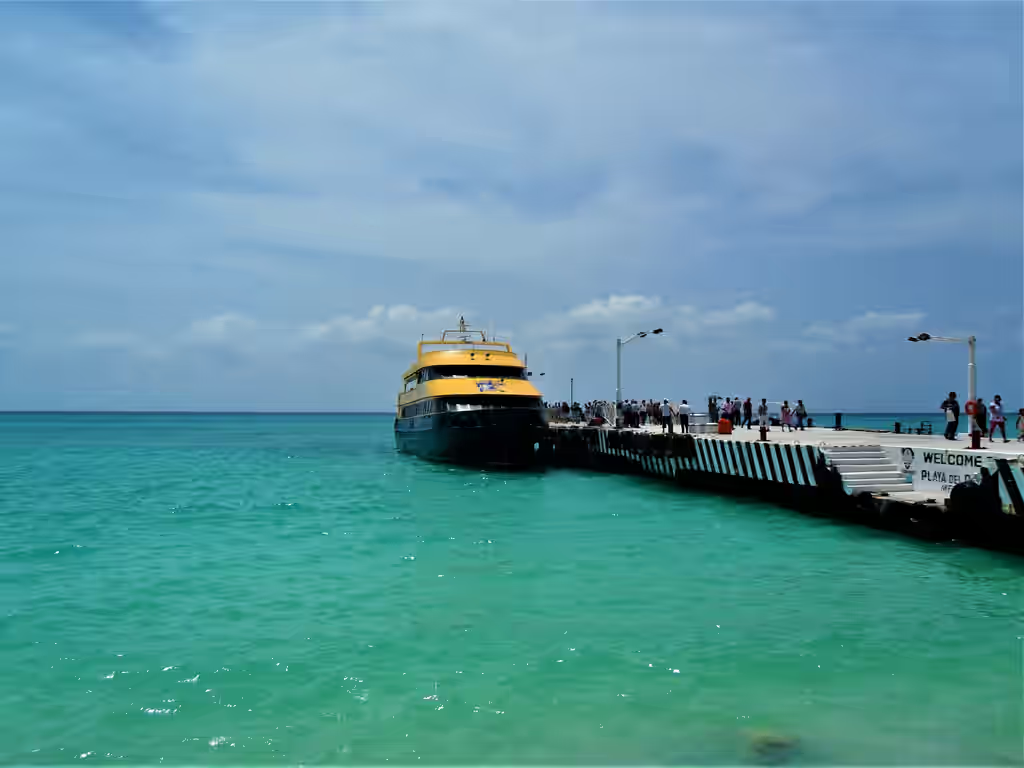
Cozumel's developed beaches line its western, leeward coast, which faces the mainland rather than the open Atlantic and therefore tends to fare better during sargassum season. The island is also the gateway to part of the Mesoamerican Reef, making it the region's premier snorkelling and diving destination.
Where the ferry leaves: the Playa del Carmen ferry terminal (Terminal Marítima) is at the end of Calle 1 Sur, at the base of Fifth Avenue (Quinta Avenida), a short, well-marked walk from the main pedestrian zone and about seven to ten minutes on foot from the ADO Quinta Avenida terminal.
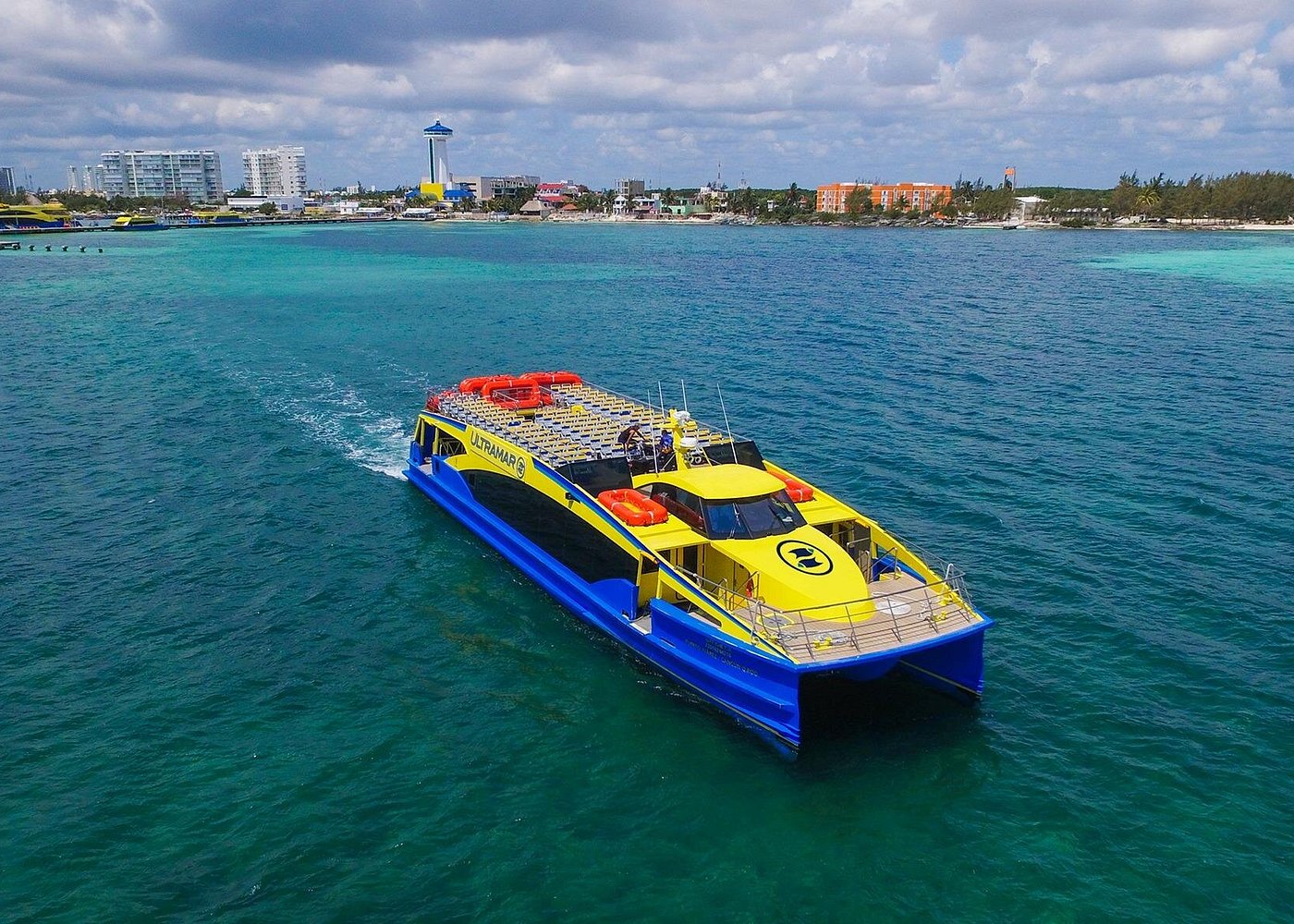
Cost and timing: two companies, Ultramar and Winjet, run the route, with a staggered departure roughly every 30 minutes. The crossing takes about 35 to 45 minutes. As of mid-2026, a one-way adult ticket is in the region of 280 to 330 pesos (around 16 to 20 US dollars), with round-trip tickets slightly cheaper per leg. Note that the ferry lines use tiered pricing: foreign visitors (extranjero) pay the highest rate, Mexican nationals from other states pay less, and residents of Quintana Roo, with local ID, pay the lowest fare of all. Buy at the clearly signed windows by the pier, and pay in pesos where possible (or by credit card), as the dollar exchange rate at the counter is usually poor. Boats run from early morning, with first departures around 6 to 7 am, until roughly 10 to 11 pm, but the exact last ferry shifts with the season, so confirm the final return departure at the counter when you arrive rather than assuming.
Book your ferry: Reserve Playa del Carmen – Cozumel ferry tickets →
Getting to a beach once you land
The ferry arrives in San Miguel, Cozumel's only town, on Avenida Rafael Melgar. The best beaches and beach clubs are spread along the coast south of town, so most visitors rent wheels for the day:
- Rent a Jeep or open-top car: the classic Cozumel choice, ideal for reaching the southern beach clubs and driving the wild, scenic eastern coast. Agencies cluster around the pier and the main square.
- Rent a scooter: cheaper and fine for shorter hops along the leeward coast, though less suited to two people with gear.
- Taxi: abundant but metered by zone; agree the fare before getting in. Short rides from the pier run roughly 100 to 150 pesos.
Rent wheels or book a reef tour: Browse Cozumel Jeep tours & snorkel trips →
3. Take the ferry to Isla Mujeres
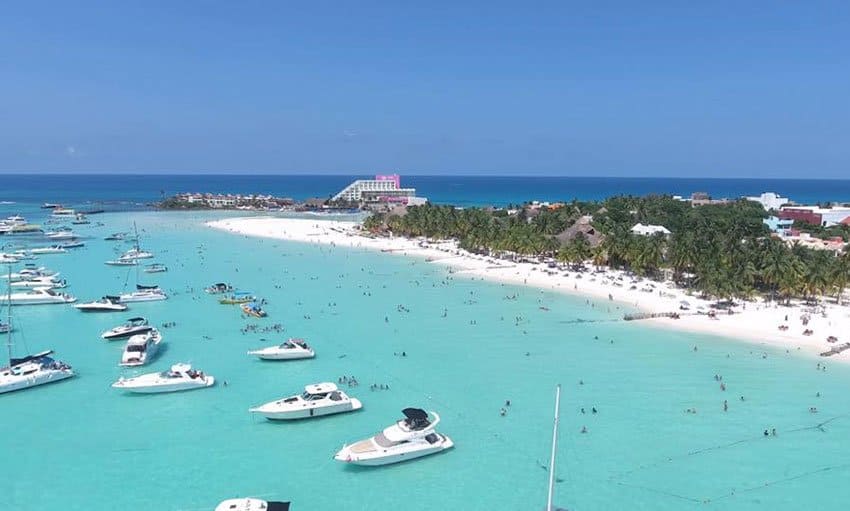
Isla Mujeres sits across the sheltered Bahía de Mujeres off Cancún, and its flagship beach, Playa Norte, faces north and west into the protected channel rather than the open sea. That orientation keeps it clear far more often than the exposed mainland, and its shallow, calm, luminous water is regularly ranked among the finest in Mexico.
From Playa del Carmen this is the more demanding of the island day trips, because you must first travel north to Cancún (by colectivo, ADO or taxi as described above) and then cross by ferry. It makes for a longer day, but Isla Mujeres rewards the effort: its particular beauty is genuinely hard to match.
Where the ferry leaves: the most frequent service is run by Ultramar from Puerto Juárez / Gran Puerto (Av. José López Portillo at Calle 49, Puerto Juárez, 77525 Cancún, Q.R.), just north of downtown Cancún. Departures run roughly every 30 minutes and the crossing takes only 15 to 20 minutes. A second, pricier service departs from several points in the Cancún Hotel Zone (Playa Tortugas at Km 6.5 and Playa Caracol at Km 9.5), convenient if you are already staying on the strip. As with Cozumel, confirm the last return ferry at the counter on the day, as evening timings vary by season.
Book your ferry: Reserve Isla Mujeres ferry tickets →
Getting around the island
Cars are unnecessary on Isla Mujeres. Most visitors rent a golf cart, the island's signature mode of transport, which is perfect for the roughly seven-kilometre run from Playa Norte at the north tip down to Punta Sur at the south. Scooters and taxis are the alternatives.
- Playa Norte: at the northern tip, the calm, shallow, sheltered beach the island is famous for, and the main reason to come. It can get very busy at weekends, so a weekday visit (Monday to Friday) is more relaxed.
- Punta Sur: the southern point and the easternmost tip of Mexico, with a clifftop sculpture path, the remains of a Maya temple to Ixchel and sweeping sea views, alongside the adjacent Parque Garrafón reef park.
Plan an activity: Book Punta Sur & Parque Garrafón →
4. From Tulum: north to the coast, or inland to the wildlife
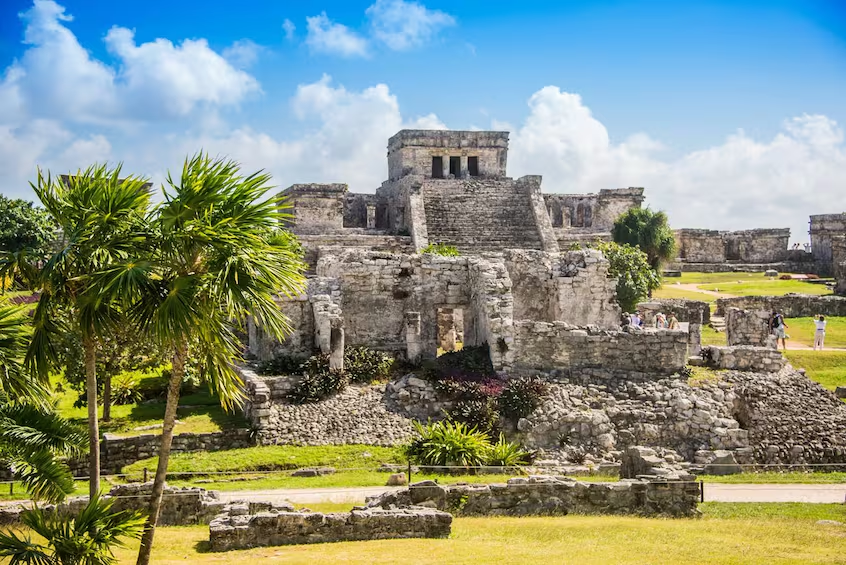
Tulum's beaches face the open Atlantic and are among the more exposed on the coast, so the same logic applies. The colectivo and ADO networks connect Tulum north through Playa del Carmen and on to Cancún, so any of the day trips above are reachable, though they make for a longer day from this far south. A colectivo north from Tulum to Playa del Carmen takes around an hour and costs a similar modest fare; from there you continue north or catch a ferry.
A shorter alternative is to hop up the coast to Akumal, roughly 25 minutes north of Tulum by colectivo for a few tens of pesos. Akumal Bay is a sheltered, reef-protected cove long known for its resident sea turtles and gentle snorkelling; when Tulum is rough, it is an easy and rewarding change of scene. Nearby, the Akumal Monkey Sanctuary makes an easy add-on, a rescue centre where you can meet spider and capuchin monkeys and other rescued animals, ideal for families or a break from the beach.
Plan a snorkel or wildlife trip: Akumal turtle & snorkel tours → · Akumal Monkey Sanctuary →
Prefer not to chase the map? Choose an activity instead
If hunting for the clearest beach on a given day is not how you want to spend your holiday, the Mexican Caribbean is full of experiences that do not depend on the sea state at all. Rather than checking conditions each morning, you can simply book a day out. A few reliable options, all unaffected by sargassum:
- Cenotes: the peninsula's freshwater sinkholes are inland, clear and cool year-round, and entirely sargassum-free. Browse cenote tours →
- Maya archaeology: Tulum, Cobá and the wonder of Chichén Itzá are all within day-trip range. Browse ruins tours →
- Eco-parks: Xcaret, Xel-Há and Xplor bundle rivers, snorkelling and shows into a single managed day. Browse eco-park tickets →
You will find many more ideas, with conditions in mind, in our guide to things to do in the Mexican Caribbean.
Before you travel each day: open the Forecast page for the satellite outlook, then use the live beach map to confirm current conditions at the exact beach you have in mind.
Prices and schedules are indicative, drawn from operator information current in mid-2026, and can change without notice; always confirm at the counter. Some links to activities and ferries are affiliate links. If you book through them, Sargazo Watch may earn a small commission at no additional cost to you. This helps keep the live map and forecast free to use.